
Description
By (author) VAN ZIJL IDA
Short /annotation
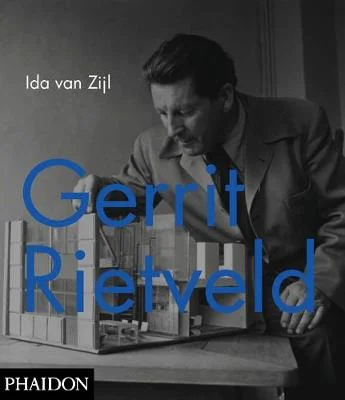
The first English monograph on Gerrit Rietveld in fifty years.
From his first great design masterpiece, the Red-Blue Chair, to his final design for the Van Gogh Museum in Amsterdam, Gerrit Rietveld (1888-1964) created a significant body of work and left a remarkable legacy. His simple yet dynamic design style has greatly affected international furniture design and has made a significant contribution to the history of architecture. This detailed yet accessible monograph is structured chronologically and richly illustrated with photographs and sketches of Reitveld”s furniture design and his architectural projects, and it is designed by Wim Crowel, the best-known Dutch graphic designer. Following Rietveld from his humble beginnings as a cabinet-maker to his final years as a world-renowned architect, this book will present both his lesser-known work and his most celebrated, such as the Schröder House of 1924 and the Zigzag Chair of 1934. It will explore his significance in the wider context of avant-garde movements, and his influence within De Stijl and Functionalism. Most crucially, this book will give Rietveld the attention he has long deserved as a designer and architect, presenting a comprehensive coverage of his output and a full analysis of his achievements.
Table of contents
1 Conviction and VisionAn introduction to Rietveld”s ideas on life in general and on architecture in particular.2 The summer of 1919?Rietveld”s upbringing and early life, and decision to focus on cabinet-making.3 The cabinetmaker of De Stijl (1917-1924)The Red-Blue chair and Rietveld”s other experiments with furniture, viewed against the backdrop of the cultural climate in the Netherlands at the end of the First World War.4 The Rietveld Schroder House (1924)?An extensiveof this famous house, as well as an examination of its place within Rietveld”s development, its relationship to the De Stijl movement and to Theo Van Doesburg and Bruno Taut”s ideas, and its contemporary reception.5 Rietveld the architect (1925-1935)?The crucial period when Rietveld decided to focus on architecture. His formal vocabulary and use of materials change radically and he develops several fundamental ideas about housing and the industrialization of the design and building process.6 Functionalist architecture (1935-1941)?During the 1930s, Rietveld built up a fully-fledged architectural practice that was highly important within the Dutch context. In the controversy between the Functionalist architects and the traditionalist Delft School, his work is often the subject of furious debate.7 World War II and postwar reconstruction (1946-1954)?The Second World War brought these developments to a standstill, and Rietveld”s contribution to the enormous post-war reconstruction in the Netherlands was limited, and he builds in other countries, including the Monseigneur Verriet Institute in Curacao.8 Re-evaluating Rietveld (1954-1964)?With a revival of interest in De Stijl in the early 1950s, Rietveld is given a prominent place within the international exhibition and he is given commissions in the cultural sector and the public housing programme in Utrecht. The most important designs from this final period are the Dutch pavilion for the Venice Biennale, the Ploeg textile factory and the Van Gogh Museum.9 Design methodology?Following the chronological survey, this chapter examines Rietveld”s design methodology in depth, showcasing the principles underpinning his stylistically diverse range of designs. This chapter will also discuss the difference of approach between Rietveld and his architectural colleagues, which is partly a result of Rietveld”s training in cabinet-making.10 Position and importance?An examination of Rietveld”s importance for twentieth-century architecture and design
Review




Reviews
There are no reviews yet.