
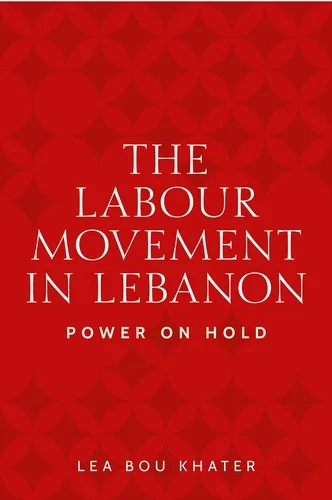
Description
By (author) Khater, Lea Bou
Short /annotation
Power on hold examines the course of the labour movement in Lebanon since independence in 1943, giving specific attention to the role of state incorporation in the preservation of the sectarian-liberal system.
The labour movement in Lebanon: Power on hold narrates the history of the Lebanese labour movement from the early twentieth century to today. Bou Khater demonstrates that trade unionism in the country has largely been a failure, for reasons including state interference, tactical co-optation, and the strategic use of sectarianism by an oligarchic elite, together with the structural weakness of a service-based laissez-faire economy. Drawing on a vast body of Arabic-language primary sources and difficult-to-access archives, the book’s conclusions are significant not only for trade unionism, but also for new forms of workers’ organisations and social movements in Lebanon and beyond.
The Lebanese case study presented here holds significant implications for the wider Arab world and for comparative studies of labour. This authoritative history of the labour movement in Lebanon is vital reading for scholars of trade unionism, Lebanese politics, and political economy.
Table of contents
Introduction: Where are the workers?
1 Shackles for the road
2 Capture and control of the labour movement
3 Public-sector employees gear up
Conclusions and notes for future forms of labour power
Appendices
Biographical note
Lea Bou Khater is a Lecturer in Development Studies at the Lebanese American Universityin Beirut. She holds a PhD in Development Studies from the School of Oriental and African Studies, University of London.
Flap / cover copy
The labour movement in Lebanon: Power on hold narrates the history of the Lebanese labour movement from the early twentieth century to today. Bou Khater demonstrates that trade unionism in the country has largely been a failure, for reasons including state interference, tactical co-optation and the strategic use of sectarianism by an oligarchic elite, together with the structural weakness of a service-based laissez-faire economy. Drawing on a vast body of Arabic-language primary sources and difficult-to-access archives, the book’s conclusions are significant not only for trade unionism, but also for new forms of workers’ organisations and social movements in Lebanon and beyond.
The Lebanese case study presented here holds significant implications for the wider Arab world and for comparative studies of labour. This authoritative history of the labour movement in Lebanon is vital reading for scholars of trade unionism, Lebanese politics and political economy.




Reviews
There are no reviews yet.