
Description
محرر المجلد Murre-van den Berg Heleen ط› محرر المجلد Sanchez Summerer, Karène ط› محرر المجلد Baarda, Tijmen
Short /annotation:
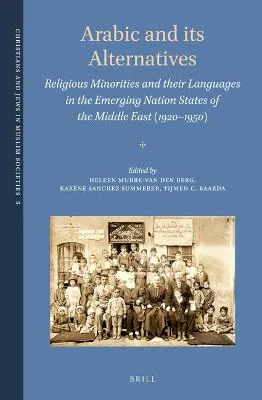
Arabic and its Alternatives discusses the complicated relationships between language, religion and communal identities in the Middle East in the period following the First World War, taking its starting point in the non-Arabic and non-Muslim communities of the region.
:
Arabic and its Alternatives discusses the complicated relationships between language, religion and communal identities in the Middle East in the period following the First World War. This volume takes its starting point in the non-Arabic and non-Muslim communities, tracing their linguistic and literary practices as part of a number of interlinked processes, including that of religious modernization, of new types of communal identity politics and of socio-political engagement with the emerging nation states and their accompanying nationalisms. These twentieth-century developments are firmly rooted in literary and linguistic practices of the Ottoman period, but take new turns under influence of colonization and decolonization, showing the versatility and resilience as much as the vulnerability of these linguistic and religious minorities in the region.
Contributors are Tijmen C. Baarda, Leyla Dakhli, Sasha R. Goldstein-Sabbah, Liora R. Halperin, Robert Isaf, Michiel Leezenberg, Merav Mack,Heleen Murre-van den Berg, Konstantinos Papastathis, Franck Salameh, Cyrus Schayegh, Emmanuel Szurek, Peter Wien.
Table of contents:
Preface Heleen Murre-van den BergNote on TranscriptionNotes on Contributors1 Arabic and its Alternatives: Language and Religion in the Ottoman Empire and its Successor States Heleen Murre-van den Berg2 Vernacularization as Governmentalization: the Development of Kurdish in Mandate Iraq Michiel Leezenberg3 “Yan, Of, Ef, Viç, İç, İs, Dis, Pulos …”: the Surname Reform, the “Non-Muslims,” and the Politics of Uncertainty in Post-genocidal Turkey Emmanuel Szurek4 “Young Phoenicians” and the Quest for a Lebanese Language: between Lebanonism, Phoenicianism, and Arabism Franck Salameh5 “Those Who Pronounce the Ḍād”: Language and Ethnicity in the Nationalist Poetry of Fuʾad al-Khatib (1880–1957) Peter Wien6 Arabic and the Syriac Christians in Iraq: Three Levels of Loyalty to the Arabist Project (1920–1950) Tijmen C. Baarda7 Awakening, or Watchfulness: Naum Faiq and Syriac Language Poetry at the Fall of the Ottoman Empire Robert Isaf8 Global Jewish Philanthropy and Linguistic Pragmatism in Baghdad Sasha R. Goldstein-Sabbah9 Past Perfect: Jewish Memories of Language and the Politics of Arabic in Mandate Palestine Liora R. Halperin10 United by Faith, Divided by Language: the Orthodox in Jerusalem Merav Mack11 Arabic vs. Greek: the Linguistic Aspect of the Jerusalem Orthodox Church Controversy in Late Ottoman Times and the British Mandate Konstantinos Papastathis12 Between Local Power and Global Politics: Playing with Languages in the Franciscan Printing Press of Jerusalem Leyla Dakhli13 Epilogue Cyrus SchayeghIndex
Biographical note:
Heleen Murre-van den Berg, PhD Leiden 1995, is Professor of Global Christianity at Radboud University, Nijmegen and director of the Institute of Eastern Christian Studies. Recent publications include (with S.R. Goldstein-Sabbah), Modernity, Minority, and the Public Sphere: Jews and Christians in the Middle East (Leiden, 2016) and Scribes and Scriptures: The Church of the East in the Eastern Ottoman Provinces (1500-1850) (Louvain, 2015).
Karène Sanchez Summerer, PhD Leiden 2009; Paris 2014, is Associate Professor at Leiden University. Her research considers the interactions between European linguistic and cultural policies and the Arab communities (1860-1948) in Palestin




Reviews
There are no reviews yet.