
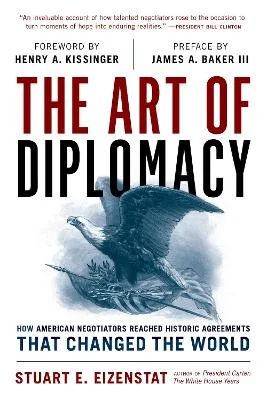
Description
By (author) Eizenstat Stuart E.; Foreword by Kissinger, Henry A.; Preface by III, James A. Baker
Short /annotation:
Stuart Eizenstat takes readers through an insiders guide to the greatest diplomatic negotiations of the past 50 years.
:
A riveting retelling of diplomatic history with praise from Bill Clinton, Hillary Clinton, Bertie Ahern (Ireland), Tony Blair (UK), Ehud Olmert (Israel), and more.
“A magisterial tome on the international negotiations that shaped modern American history…. Grand in scope and grounded in decades of experience,
The Art of Diplomacy
is a compelling work of political history aimed at the diplomatic negotiators of tomorrow.”
-Foreword Reviews
Commended by
Kirkus Reviews
, which says Eizenstat writes with “authority and clarity of experience.”
Inside the greatest diplomatic negotiations of the past 50 years
In one readable volume, diplomat and negotiator Stuart E. Eizenstat covers every major contemporary international agreement, from the treaty to end the Vietnam War to the Kyoto Protocols and the Iranian Nuclear Accord. Written from the perspective that only a participant in top level negotiations can bring, Eizenstat recounts the events that led up to the negotiation, the drama that took place around the table, and draws lessons from successful and unsuccessful strategies and tactics. Based on interviews with over 60 key figures in American diplomacy, including former presidents and secretaries of state, and major political figures abroad, Eizenstat provides an intimate view of diplomacy as today’s history. The Art of Diplomacy will be an indispensable volume to understand American foreign policy and provide invaluable insights on the art of negotiation for anyone involved in government or business negotiations.
Table of contents:
Contents
Foreword by Henry A. Kissinger
Preface by James A. Baker III
Introduction: The Value of Diplomacy
Part One: The U.S. and National Security
1: Henry Kissinger: Master Diplomat
2: German Reunification: James Baker Adds Two Plus Four
3: Iran: Negotiating with a Radical Theocracy
Part Two: The U.S. As Mediator
4: The Middle East: From Camp David to the Abraham Accords
5: Good Friday: George Mitchell and the Repair of a Divided Ireland
6: The Holocaust: Belated and Imperfect Justice
7: Unsung Heroes: Chester Crocker and Bernie Aronson
Part Three: The U.S. at War
8: The Balkan Wars: The Marriage of Force and Diplomacy
9: Afghanistan: From Victory to Failure
10: Iraq: A Tale of Two Wars
Part Four: The U.S. in Multilateral Negotiations
11: International Trade: Negotiating at Home and Abroad
12: Climate Change: The Supreme Test of Diplomacy
Conclusion: Lessons on the Art of Diplomacy
Notes
Acknowledgments
Index
About the Author
Review quote:
A former U.S. ambassador to the E.U. lays out a useful roadmap to successful international negotiations. Negotiations are a crucial part of statecraft, writes Eizenstat. In his latest book, the author aims to distill key events in U.S. negotiations into lessons for the next generation of diplomats and students. In some of the cases, Eizenstat had direct involvement; regarding others, he studied the records closely and interviewed the participants. As any diplomat will tell you, an essential ingredient in a successful negotiation is preparation. You must understand what the other side wants and how far they will go to get it. In the case of American negotiators, they must be clear about their own objectives while also maintaining the support of the Oval Office. Both sides have to be willing to give something, but they must also be able to walk away with something they can cla




Reviews
There are no reviews yet.